Old Testament Prophecies of Jesus' Birth
Messianic Predictions Fulfilled in the Nativity of Christ

The Dead Sea Scrolls contain some of the oldest preserved copies of Messianic prophecies (Photo: Unsplash)
Table of Contents
Introduction to Messianic Prophecy
The Old Testament contains hundreds of prophecies concerning the coming Messiah, with at least 12 major predictions specifically addressing the birth and early life of Jesus Christ. These prophecies, written centuries before their fulfillment, provide compelling evidence for the divine inspiration of Scripture and the identity of Jesus as the promised Messiah.
Messianic prophecy serves multiple purposes in biblical theology. First, it demonstrates God's sovereign control over history, revealing that He declares "the end from the beginning, and from ancient times things that have not been done" (Isaiah 46:10). Second, it provides a framework for recognizing the Messiah when He arrives. Third, it establishes continuity between the Old and New Testaments, showing that Jesus' birth was not an afterthought but the culmination of God's redemptive plan established before the foundation of the world.
The statistical probability of one person fulfilling even eight of these prophecies by chance has been calculated at 1 in 10^17 (one in 100 quadrillion). When considering all Messianic prophecies, the mathematical impossibility of accidental fulfillment becomes overwhelming evidence for divine orchestration.
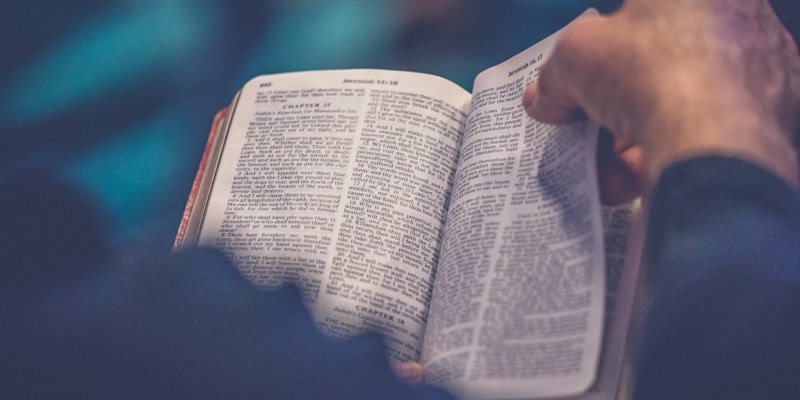
Ancient manuscripts preserve the original Messianic prophecies written centuries before Christ
The Virgin Birth Prophecy (Isaiah 7:14)
Prophecy: Isaiah 7:14
"Therefore the Lord himself will give you a sign: The virgin will conceive and give birth to a son, and will call him Immanuel."
Fulfillment: "All this took place to fulfill what the Lord had said through the prophet: 'The virgin will conceive and give birth to a son, and they will call him Immanuel' (which means 'God with us')."
— Matthew 1:22-23
The prophecy of the virgin birth, delivered by the prophet Isaiah around 740 BC, stands as one of the most remarkable Messianic predictions. The Hebrew word used for "virgin" is almah, which specifically denotes a young woman of marriageable age who has not had sexual relations. While some modern scholars have attempted to translate this word merely as "young woman," the ancient Greek translation of the Old Testament (the Septuagint, completed around 200 BC) used the word parthenos, which unambiguously means "virgin."
The historical context of this prophecy adds depth to its significance. King Ahaz of Judah was facing a military crisis, threatened by the alliance of Israel and Syria. God offered Ahaz a sign, and when the king refused, God gave one anyway—a sign that would point far beyond the immediate crisis to the ultimate deliverance God would provide through the Messiah.
The name "Immanuel," meaning "God with us," carries profound theological weight. It signifies that the child born would be God's presence among His people in a unique and unprecedented way. Matthew's Gospel explicitly identifies this prophecy as fulfilled in Jesus' birth to the virgin Mary, who conceived by the Holy Spirit without human father.
The Bethlehem Birthplace (Micah 5:2)
Prophecy: Micah 5:2
"But you, Bethlehem Ephrathah, though you are small among the clans of Judah, out of you will come for me one who will be ruler over Israel, whose origins are from of old, from ancient times."
Fulfillment: "After Jesus was born in Bethlehem in Judea, during the time of King Herod, Magi from the east came to Jerusalem..."
— Matthew 2:1
The prophet Micah, writing around 710 BC, specified not just the town but the exact region where the Messiah would be born. Bethlehem Ephrathah distinguished this Bethlehem from another town of the same name in the territory of Zebulun. Bethlehem, located approximately five miles south of Jerusalem, was indeed a small town, making this prophecy all the more remarkable.
The prophecy contains two significant elements about the Messiah's identity. First, He would be a "ruler over Israel," indicating His royal and political authority. Second, His "origins are from of old, from ancient times," suggesting pre-existence and eternal nature—attributes that point to divinity.
The fulfillment of this prophecy required divine orchestration of historical events. Mary and Joseph lived in Nazareth, over 70 miles north of Bethlehem. However, the Roman census decreed by Caesar Augustus required Joseph to travel to his ancestral town of Bethlehem because he was of the house and line of David. This historical circumstance, occurring precisely when it did, ensured that Jesus was born in the prophesied location.

Bethlehem, the prophesied birthplace of the Messiah, remains a significant pilgrimage site
The Davidic Lineage Prophecies
2 Samuel 7:12-13 - The Eternal Kingdom
Prophecy: 2 Samuel 7:12-13
"When your days are over and you rest with your ancestors, I will raise up your offspring to succeed you, your own flesh and blood, and I will establish his kingdom. He is the one who will build a house for my Name, and I will establish the throne of his kingdom forever."
Fulfillment: "The Lord God will give him the throne of his father David, and he will reign over Jacob's descendants forever; his kingdom will never end."
— Luke 1:32-33
God's covenant with David, delivered through the prophet Nathan around 1000 BC, promised that David's descendant would establish an eternal kingdom. This prophecy became the foundation for Jewish Messianic expectation. The Messiah would be known as the "Son of David," a title frequently applied to Jesus in the Gospels.
Jeremiah 23:5 - The Righteous Branch
Prophecy: Jeremiah 23:5
"'The days are coming,' declares the Lord, 'when I will raise up for David a righteous Branch, a King who will reign wisely and do what is just and right in the land.'"
Fulfillment: Both Matthew and Luke provide genealogies tracing Jesus' lineage back to King David, establishing His legal right to the Davidic throne.
— Matthew 1:1-17; Luke 3:23-38
The image of a "branch" growing from David's lineage became a common Messianic metaphor in the Old Testament. Isaiah 11:1 similarly speaks of "a shoot from the stump of Jesse" (David's father), and Zechariah 3:8 refers to "my servant, the Branch." These prophecies emphasized that the Messiah would come from David's royal line, even when that line appeared cut down or diminished.
Complete Prophecy Fulfillment Table
| Prophecy | Old Testament Reference | New Testament Fulfillment |
|---|---|---|
| Born of a virgin | Isaiah 7:14 | Matthew 1:18-25; Luke 1:26-35 |
| Born in Bethlehem | Micah 5:2 | Matthew 2:1-6; Luke 2:4-7 |
| From David's lineage | 2 Samuel 7:12-13; Jeremiah 23:5 | Matthew 1:1-17; Luke 3:23-38 |
| Called out of Egypt | Hosea 11:1 | Matthew 2:14-15 |
| Massacre of infants | Jeremiah 31:15 | Matthew 2:16-18 |
| Preceded by a messenger | Isaiah 40:3; Malachi 3:1 | Matthew 3:1-3; Luke 1:17 |
| Star would announce birth | Numbers 24:17 | Matthew 2:2, 9-10 |
| Gifts of gold, frankincense, myrrh | Isaiah 60:6 | Matthew 2:11 |
| Would be worshipped by Gentiles | Psalm 72:10-11; Isaiah 49:6 | Matthew 2:1-12 |
| Would bring light to darkness | Isaiah 9:1-2 | Matthew 4:13-16 |
| Would be called Immanuel | Isaiah 7:14 | Matthew 1:23 |
| Would be anointed by the Spirit | Isaiah 11:2; 61:1 | Luke 3:22; 4:18 |

The continuity between Old Testament prophecy and New Testament fulfillment demonstrates divine inspiration
Historical Evidence and Scholarly Analysis
The Dead Sea Scrolls Confirmation
The discovery of the Dead Sea Scrolls at Qumran between 1947 and 1956 provided remarkable confirmation of the antiquity of Messianic prophecies. The Great Isaiah Scroll (1QIsa^a), dating to approximately 125 BC, contains the complete text of Isaiah, including chapter 7:14 with the virgin birth prophecy. This discovery proved that these prophecies existed centuries before Jesus' birth, eliminating any possibility that they were written after the fact.
Septuagint Translation Evidence
The Septuagint, the Greek translation of the Hebrew Old Testament completed between 280-150 BC, translates Isaiah 7:14's almah as parthenos (virgin). This demonstrates that Jewish scholars centuries before Christ understood this prophecy to predict a virgin birth, not merely a young woman's conception.
Jewish Scholarly Recognition
Even before the Christian era, Jewish interpreters recognized these passages as Messianic. The Targum Jonathan, an Aramaic paraphrase of the Prophets dating to the first century AD, explicitly identifies Micah 5:2 as referring to the Messiah. The Talmud also contains discussions recognizing the Messianic significance of several of these prophecies.
Evidence for Prophetic Authenticity
- Dead Sea Scrolls: Isaiah scroll (125 BC) confirms virgin birth prophecy predates Jesus by over a century
- Septuagint: Greek translation (280-150 BC) uses "parthenos" (virgin) for Isaiah 7:14
- Jewish Targums: Aramaic paraphrases identify Messianic significance before Christian era
- Historical records: Roman census records confirm historical context of Jesus' birth
- Statistical probability: Mathematical impossibility of accidental fulfillment
- Multiple independent sources: Matthew and Luke provide independent accounts confirming fulfillment
Theological Significance
Divine Sovereignty Over History
The precise fulfillment of Old Testament prophecies in Jesus' birth demonstrates God's sovereign control over human history. The birth of Jesus in Bethlehem, to a virgin, of David's lineage, at the exact time prophesied, required the orchestration of countless events across centuries. Roman emperors issued decrees, Jewish genealogies were preserved, and families traveled at precise moments—all fulfilling what God had declared hundreds of years earlier.
Continuity of God's Redemptive Plan
These prophecies reveal that Jesus' birth was not a response to human failure but the execution of a plan established before creation. From the first promise in Genesis 3:15 that the "seed of the woman" would crush the serpent's head, through the specific promises to Abraham, David, and the prophets, God's redemptive purpose unfolds with remarkable consistency.
Validation of Jesus' Identity
The fulfillment of Messianic prophecies provides objective evidence for Jesus' identity as the promised Messiah. When the religious leaders asked Jesus for a sign, He pointed to the prophetic witness: "You study the Scriptures diligently because you think that in them you have eternal life. These are the very Scriptures that testify about me" (John 5:39).

Studying Messianic prophecies deepens understanding of God's redemptive plan
Conclusion
The Old Testament prophecies concerning Jesus' birth stand as compelling evidence for the divine inspiration of Scripture and the identity of Jesus as the promised Messiah. Written centuries before their fulfillment, these predictions were recorded in historical contexts that had no knowledge of the specific circumstances of Jesus' birth.
The virgin birth prophecy of Isaiah 7:14, the Bethlehem birthplace prediction of Micah 5:2, the Davidic lineage promises, and the numerous other Messianic prophecies form an interconnected web of prediction and fulfillment that defies natural explanation. The statistical probability of one person fulfilling even a fraction of these prophecies by chance is astronomically small.
For believers, these prophecies strengthen faith by demonstrating that God keeps His promises. For skeptics, they present a challenge that requires serious engagement with the historical and textual evidence. For all readers, they reveal a God who declares the end from the beginning, who works all things according to His purpose, and who faithfully fulfills every word He has spoken.
As we reflect on these ancient prophecies and their precise fulfillment in Jesus Christ, we are invited to join the shepherds, the Magi, and countless believers throughout history in recognizing and worshipping the promised Messiah—the One whose origins are "from of old, from ancient times," yet who was born in a humble stable in Bethlehem to bring salvation to the world.
Frequently Asked Questions
What Old Testament prophecy predicted Jesus would be born of a virgin?
Isaiah 7:14 prophesied that "The virgin will conceive and give birth to a son, and will call him Immanuel." This prophecy, written approximately 700 years before Christ, was fulfilled when Mary conceived Jesus by the Holy Spirit, as recorded in Matthew 1:18-23. The Hebrew word "almah" specifically denotes a virgin, and the ancient Greek Septuagint translation (200 BC) used "parthenos," which unambiguously means virgin.
Where did the Old Testament predict the Messiah would be born?
Micah 5:2 specifically predicted that the Messiah would be born in Bethlehem Ephrathah: "But you, Bethlehem Ephrathah, though you are small among the clans of Judah, out of you will come for me one who will be ruler over Israel." This was fulfilled when Jesus was born in Bethlehem during the reign of King Herod, as Mary and Joseph traveled there for the Roman census.
How many Old Testament prophecies about Jesus' birth were fulfilled?
Scholars identify at least 12 major Old Testament prophecies specifically related to Jesus' birth and early life, including His virgin birth (Isaiah 7:14), birthplace in Bethlehem (Micah 5:2), Davidic lineage (2 Samuel 7:12-13; Jeremiah 23:5), being called out of Egypt (Hosea 11:1), the massacre of infants (Jeremiah 31:15), and the visit of the Magi with gifts (Isaiah 60:6).
How do we know these prophecies weren't written after Jesus was born?
The Dead Sea Scrolls, discovered between 1947-1956, include the Great Isaiah Scroll dating to approximately 125 BC—over a century before Jesus' birth. This scroll contains the complete text of Isaiah, including the virgin birth prophecy. Additionally, the Septuagint (Greek Old Testament translation, 280-150 BC) and Jewish Targums confirm these prophecies existed and were recognized as Messianic before the Christian era.
What is the statistical probability of one person fulfilling these prophecies?
Professor Peter Stoner of Pasadena College calculated that the probability of one person fulfilling just 8 Messianic prophecies by chance is 1 in 10^17 (100 quadrillion). When considering all 12+ prophecies related to Jesus' birth and life, the mathematical probability becomes essentially zero, providing strong evidence for divine orchestration rather than coincidence.


